Underfloor heating used to be a luxury fit. These days it’s the standard choice on new builds and a serious option in plenty of refurbs: quiet, invisible, more comfortable than any radiator setup, and better suited to modern low-temperature heat sources than anything else. The catch is that it only works as well as its design and commissioning.
Priority One Plumbing has been fitting underfloor heating across Gloucestershire for over twenty years. We’re Gas Safe registered, OFTEC accredited, City & Guilds qualified and Worcester Bosch and Vaillant accredited installers.









There are two types of underfloor heating, and they’re not really competing products.
Why wet, every time:
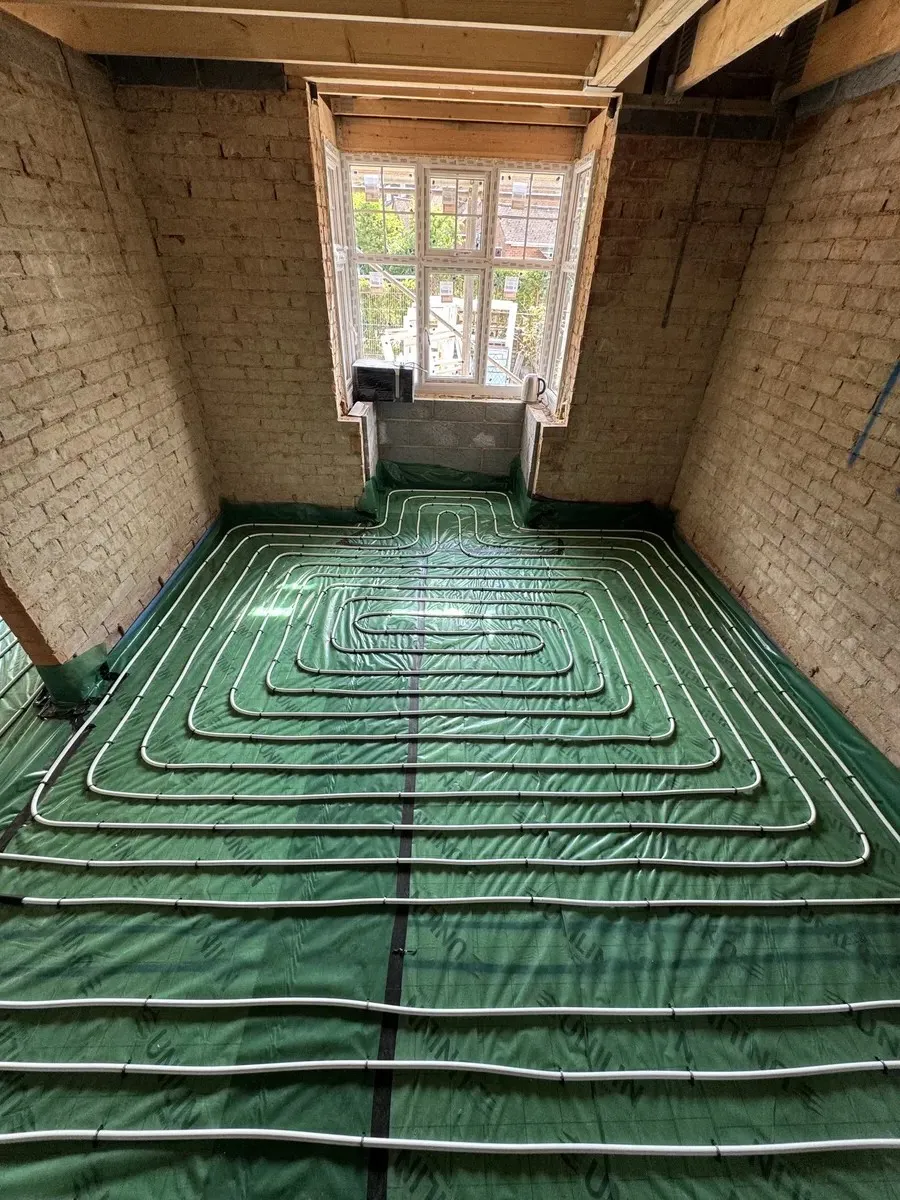
Anyone can lay pipe. The reason underfloor heating gets a reputation for cold floors and slow warm-ups is almost always design, not pipework. Two numbers decide whether a system heats the room or just warms it slightly.
Pipe centres. How far apart the pipes are laid. Tighten the spacing and you get more heat out of the same floor area; which is what a north-facing room, a room with a lot of glazing, or a space under a tiled floor actually needs. Space them at a uniform 200mm across a whole house and some rooms will be fine while others never quite get there. We calculate the spacing room by room from a proper heat loss figure, and in most houses we do it changes three or four times across a single floor.
Flow temperature. Underfloor heating runs at roughly 35 to 50°C, against 65 to 75°C for radiators. Set it too low and the floor can’t deliver the output the room needs. Set it too high and you get an uncomfortably hot floor, wasted energy, and on a heat pump a serious efficiency penalty. It follows from the pipe centres, the floor construction and the finish going on top, which is why those decisions are made together, at design stage.
Then it has to be commissioned: every loop balanced so flow is even across the whole system. It’s the step that gets cut from cheap quotes, and it’s the difference between a system that works for thirty years and one that nags you forever. We do the heat loss calculation, the loop design and the commissioning on every job, and we hand over the design figures in writing.
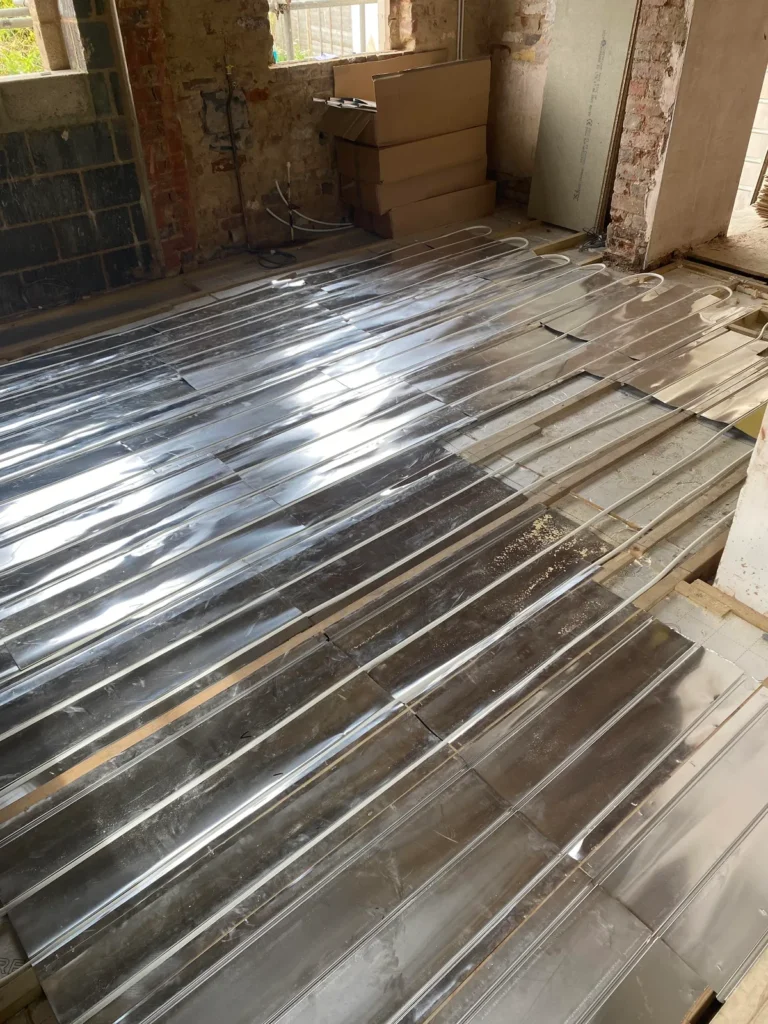
Underfloor heating is priced by floor area, at a rate set by the system your floor calls for:
Those rates cover the underfloor system itself, insulation, pipework, spreader plates or trays, manifold, zone controls, thermostats and commissioning. The screed pour, floor finishes and the boiler or heat pump feeding the system sit outside them. What moves the number is zone count, how far the manifold sits from the rooms it serves, existing insulation depth, and whether floors need lifting first. We survey before we quote, and the price we give you is fixed.
Which system suits you comes down to what is under your feet right now. New builds and extensions are straightforward. Retrofits depend on whether you have a solid floor or suspended timber.
Larger properties are zoned room by room with their own thermostats, and we site the manifold somewhere accessible so future maintenance never means lifting flooring. Listed buildings and conservation areas may need consent for floor build-up changes, we flag that early.
We install Underfloor Heating throughout Gloucestershire:
We cover the wider county too.
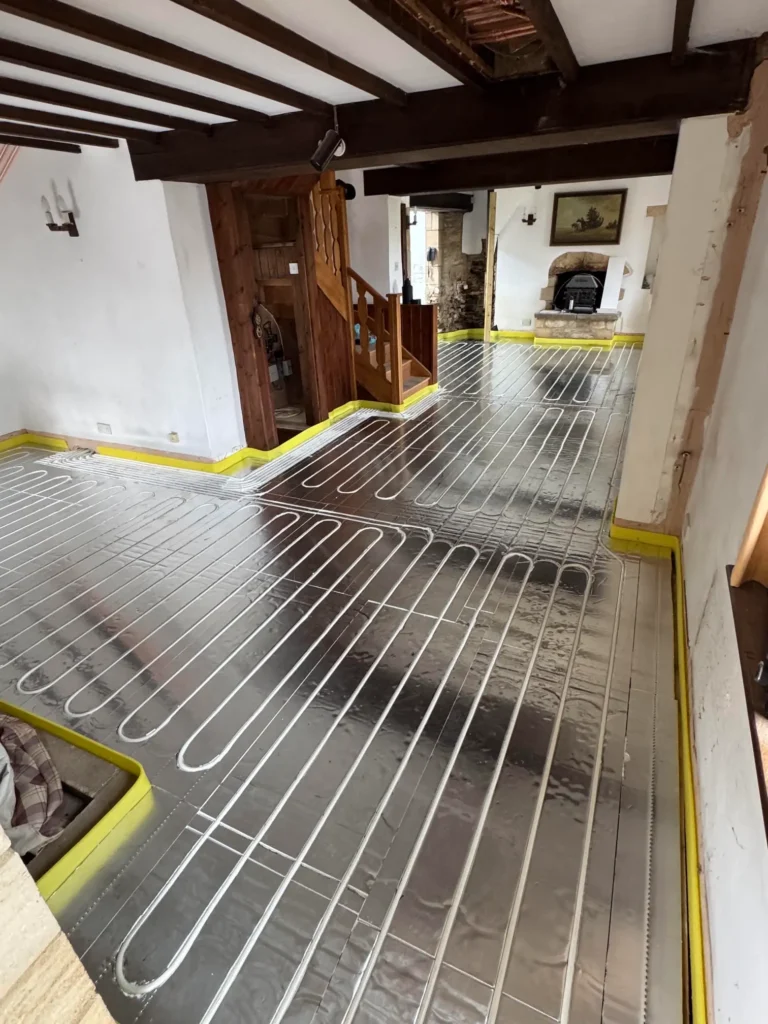
Underfloor heating runs at 35 to 50°C flow temperatures against 65 to 75°C for radiators, exactly where an air source heat pump is most efficient. Paired with underfloor heating, a heat pump delivers more heat per unit of electricity across the year (its SCOP, the seasonal efficiency figure) than the same heat pump running radiators. If you’re switching from oil, that combination usually makes the most sense. Staying with gas? Modern condensing boilers run underfloor heating perfectly well.

A proper in-person survey: floor type, build-up depth, insulation, manifold position and zone planning.
Where underfloor heating goes in as part of an air source heat pump installation, the whole job falls under our MCS certification; which brings the Insurance-Backed Guarantee and Renewable Energy Consumer Code protections with it. On a standalone underfloor heating installation those schemes don’t apply, and we don’t claim them.
For a free no obligation survey and fixed quote, get in touch or call 07727 015 843.

Only use a GAS SAFE REGISTERED ENGINEER to FIT, FIX and SERVICE your gas appliances. Click here for more info.